
Routing architecture
Platform choice (buy vs build), acquirer mix, rules by BIN, country, currency, card type and capacity.
An orchestration layer is only as good as the rails behind it and the rules inside it. We design both: which acquirers, which routes, and the logic that decides per transaction, without retry patterns that get you flagged.
Volume sits on whichever PSP was set up first, not whichever approves best for that BIN and country.
Blind cascading of hard declines inflates scheme fees and gets noticed. Good orchestration respects decline codes.
A gateway that is also your router makes switching a migration project, not a config change.
Platform choice (buy vs build), acquirer mix, rules by BIN, country, currency, card type and capacity.
Error-rate and approval-rate monitors per route with automatic drain and traffic split when a route degrades.
Soft-decline retries only where scheme rules and decline codes allow, with caps that keep you inside retry limits.
Per-route, per-BIN reporting so routing decisions are made on numbers, not anecdotes.
Current PSPs, approval rates by segment, decline codes, fees and contract terms.
Target routing map and platform shortlist, with the acquirers each route depends on.
Platform onboarding, rules, tokens and webhooks, tested against live traffic splits.
Monthly rule review against approval and cost data.
Software that sits between your checkout and multiple PSPs or acquirers and decides, per transaction, where to send it, based on rules such as approval rate, cost, currency and route health.
Not yet. Orchestration pays off once you have two or more live routes. With one, the priority is getting a second, properly underwritten route; the router comes with it.
Most merchants should buy: vaulting, PCI scope and connector maintenance are expensive to own. Building makes sense at large scale or with unusual routing needs.
It depends entirely on your traffic mix and current setup. Be skeptical of headline uplift claims; measure your own decline data by segment before and after.
How a payment orchestration platform routes, cascades and fails over across multiple acquirers, what it can and cannot fix for high-risk merchants, and a practical checklist for choosing one.
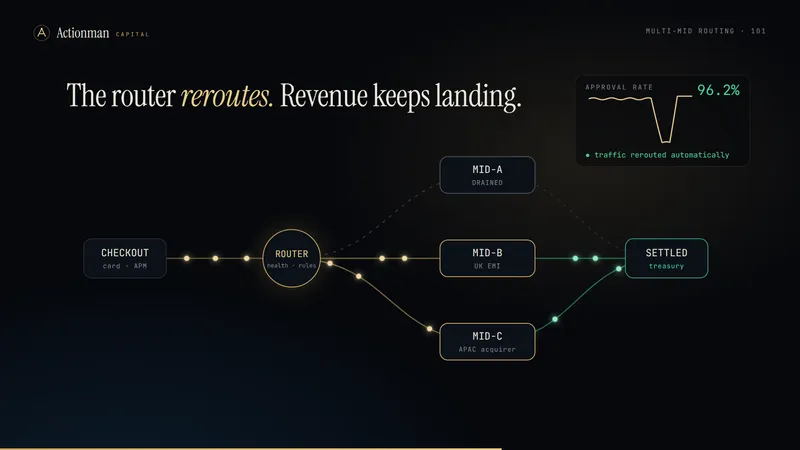
A high-risk merchant account is one decision away from zero. How multi-MID routing and failover work, the 2026 VAMP and retry rules a router must respect, why setups still fail, and where resilience ends and MID stacking begins.
Visa's VAMP threshold dropped to 1.5% in April 2026, and Mastercard still flags merchants at 100 chargebacks and 1.5%. How each ratio is calculated, what it costs, and how to bring it down legitimately.