
Primary + backup merchant accounts
Introductions to acquirers and PSPs that actually board your vertical, with an underwriting pack built to get approved the first time.
Most high-risk merchants don’t lose processing over fraud. They lose it because everything runs through one MID with one acquirer. We put you on several, underwritten for the real business, with routing that keeps you live when one goes dark.
Portfolio exits, sponsor-bank changes or a scheme program flag can end a single-MID setup with 30 days’ notice, or none.
5–10% rolling reserves held for months add up fast. Without a negotiation history, you take whatever terms you’re handed.
One route means one issuer relationship profile. Cross-border CNP declines quietly cost more than the fees you’re fighting over.
Introductions to acquirers and PSPs that actually board your vertical, with an underwriting pack built to get approved the first time.
Routing by BIN, country, approval rate and capacity, with health checks that drain a failing route before customers notice.
Descriptor fixes, alerts and RDR, refund policy and 3-D Secure strategy to keep you clear of VAMP and Mastercard thresholds.
Settlement into accounts you control, sweeps to treasury, and reserve terms renegotiated once you’ve built history.
Vertical, volumes, current processor statements, ratios and why you’re here.
Entity docs, website compliance review, processing history and risk controls written up the way underwriters read them.
Applications to the acquirers that fit, in parallel, with full disclosure of where else you process.
Orchestration live, failover tested, monthly ratio review.
Acquirers classify by expected loss: vertical (MCC), billing model, geography and processing history. iGaming, nutra, subscriptions, forex and travel are common examples. High-risk means fewer acquirers, higher pricing and reserves, not a dead end.
Yes, when each account is underwritten for the real business and each acquirer knows you process elsewhere. Spreading one business across thin accounts to hide chargeback ratios is prohibited and ends in terminations and MATCH listings.
It depends on the vertical, documentation and history. A complete underwriting pack is the biggest factor we control; incomplete files are the usual cause of weeks-long delays.
We can assess it honestly. Some listings can be challenged through the acquirer that listed you, and some providers board MATCH-listed merchants with full disclosure and strict terms. We do not help anyone re-apply under new entities to hide a listing.
A subscription merchant processing everything through one acquirer gets a termination notice. The job: stay live, then never be in that position again.
High-risk merchant accounts All scenariosSee how other mandates wentCase scenarios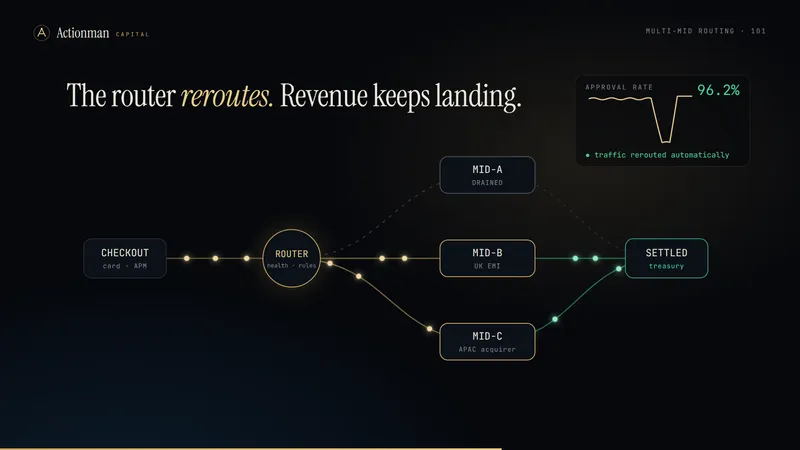
A high-risk merchant account is one decision away from zero. How multi-MID routing and failover work, the 2026 VAMP and retry rules a router must respect, why setups still fail, and where resilience ends and MID stacking begins.
Visa's VAMP threshold dropped to 1.5% in April 2026, and Mastercard still flags merchants at 100 chargebacks and 1.5%. How each ratio is calculated, what it costs, and how to bring it down legitimately.
A Mastercard MATCH listing lasts five years and only the listing acquirer can remove it early. The reason codes, how to find out why you were listed, and the removal routes that actually work.