
Rolling reservecalculator.
A 10% reserve sounds small until you see six months of it stacked up. Model exactly how much working capital your reserve terms lock up, and when it comes back.
Reserves are negotiable: lower percentages, shorter holds, caps, or a second acquirer with better terms. We bring the processing history and make the case.
Model: each day’s reserve is released after the hold period. Real terms vary (caps, minimums, release schedules); use your merchant agreement.
How a rolling reserve works
- A rolling reserve withholds a percentage of each settlement and releases it after a fixed hold period, commonly 90 to 180 days.
- The balance builds until the first release date, then stabilizes: at flat volume it settles at roughly reserve % × monthly volume × hold period in months.
- Growth keeps the balance rising, because new, larger withholdings outpace releases from smaller past months.
- Reserve terms are negotiable once you have clean processing history: lower percentage, shorter hold, or a cap after which no new funds are withheld.
What is a typical rolling reserve for high-risk merchants?
Commonly 5–10% held for around 180 days, though terms vary widely by vertical, history and acquirer. Some accounts use a fixed upfront reserve or a capped reserve instead.
When is the reserve released?
Each day’s or each settlement’s withheld amount is released when its hold period ends, so releases begin after the first hold period and continue on a rolling basis.
Can I negotiate my reserve?
Usually, after several months of stable volume and low chargeback and fraud ratios. Ask for a lower percentage, a shorter hold period or a cap.
What happens to the reserve if my account is closed?
The acquirer typically keeps it until the chargeback window has passed for your last transactions, which can mean months after closure. Check your merchant agreement.
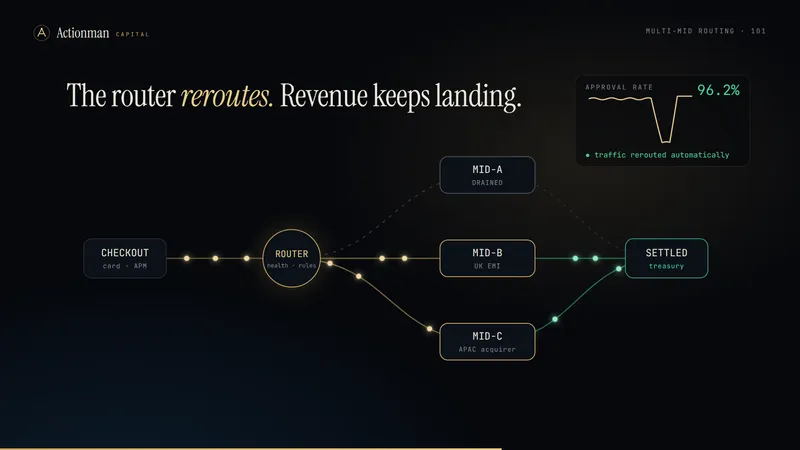
High-Risk Merchant Accounts: How Multi-MID Routing Keeps You Processing
A high-risk merchant account is one decision away from zero. How multi-MID routing and failover work, the 2026 VAMP and retry rules a router must respect, why setups still fail, and where resilience ends and MID stacking begins.
Payment Orchestration Platform Guide for High-Risk Merchants
How a payment orchestration platform routes, cascades and fails over across multiple acquirers, what it can and cannot fix for high-risk merchants, and a practical checklist for choosing one.
Business Bank Account Frozen? Causes, First Steps and Prevention
Why banks freeze business accounts, how to tell a compliance review from de-risking or a legal hold, what to do in the first 48 hours, and how to structure treasury so one freeze isn't fatal.