
Nutra Merchant Account 2026: Trials, Underwriting and Reserves
Nutra merchant accounts are still obtainable in 2026, but trial offers need MCC 5968, Mastercard registration and Visa's trial disclosures, and acquirers now underwrite owners and funnels the way the FTC's Humboldt order describes.
A nutra merchant account is still obtainable in 2026, but only for a file that can survive an underwriter who now reads your checkout, your owners and your chargeback history the way a regulator would. Straight-sale supplements with honest claims get approved at specialist high-risk acquirers. Trial-and-rebill offers get approved far less often, and only when they are registered as what they are: MCC 5968, registered with Mastercard, with every Visa and Mastercard trial disclosure in place.
What changed this year is the pressure on the acquirers. On 8 September 2026 the FTC filed a proposed $12 million order against processor Humboldt Merchant Services for processing for more than 1,000 shell merchants used in unauthorized-billing schemes. The order bars Humboldt from straw companies, MATCH-listed merchants, and mailbox-only e-commerce merchants that use negative-option billing or have no processing history. Every high-risk acquirer has read it, and its underwriting questions now look like the order's checklist.
This guide covers how acquirers classify nutra, the card network trial rules, what underwriters ask for after Humboldt, why applications fail, and the setup that keeps an account open.
Why nutra is underwritten as high-risk
Nutra combines three things acquirers price for: health claims that regulators police, billing models that generate disputes, and a long history of fraud in the vertical.
- Claims risk. In the US, the FTC's Health Products Compliance Guidance (December 2022) says health claims need "competent and reliable scientific evidence", which generally means randomized controlled human trials. A "clinically tested ingredient" claim implies the finished product works, so ingredient studies alone may not carry it. In the EU and UK, health claims on food supplements must come from the authorised list (Regulation (EU) No 432/2012). An acquirer that sees "melts belly fat" or "cures anxiety" on your landing page sees a regulator, then a card network, then a termination.
- Billing risk. "Free" or $4.95 trials that roll into $80+ monthly shipments are the textbook source of "I didn't authorise this" disputes. The FTC's Triangle Media case (complaint 2018, stipulated judgments May 2019) involved exactly this model: "risk-free" trials for the cost of shipping, then the full product price and continuity charges.
- Network exposure. Since 1 April 2026, Visa's VAMP flags a merchant as Excessive at a 1.5% ratio (with a 1,500-count minimum in most regions), and that ratio counts fraud reports plus disputes. Trial rebills that customers don't recognise produce both. Our breakdown of Visa VAMP and Mastercard chargeback thresholds has the formulas.
None of this makes nutra unbankable. It means the acquirer is underwriting your marketing and your billing flow, not just your company documents.
Straight sale vs trial: two different accounts
Most nutra applications fail because the merchant describes one business and runs another. Underwriters treat these as separate risk profiles:
| Straight sale (one-off or opt-in subscription) | Trial / negative option (physical product) |
|---|---|---|
What it is | Customer pays full price; any subscription is chosen and priced upfront | Free or low-cost trial that converts to recurring shipments unless cancelled |
MCC | Retail MCC assigned by the acquirer for the products | 5968 (Direct Marketing – Continuity/Subscription) under Mastercard's rules |
Network registration | Usually none | Mastercard registration required since 12 April 2019; Visa's VIRP lists MCC 5968 as a Tier 3 high-integrity-risk category |
Visa trial rules (since 18 April 2020) | Apply only if you offer a trial or intro price | Apply in full |
Typical acquirer appetite | Specialist high-risk acquirers, some mainstream PSPs with restrictions | Few acquirers; small starting caps |
If your offer converts a trial into recurring shipments, it is a negative-option merchant. Putting it on a retail MCC to get approved is misdescribing the business to the acquirer. When the rebills start, the mismatch shows up in the dispute data, and the termination that follows can come with a MATCH listing. We don't set up files that way, and no acquirer worth having will accept one.
Card network rules for nutra trials and subscriptions
These are the rules an underwriter will check on your checkout before approval, and the acquirer's compliance team will test again after go-live.
Visa (trials and introductory offers, effective 18 April 2020, physical and digital goods)
- Express consent to the ongoing subscription at enrolment.
- Confirmation by email or SMS with the terms, start date, product description, ongoing amount and frequency, and a simple online cancellation route, even when nothing is charged at sign-up.
- Reminder at least 7 days before the first charge after a trial or intro period ends, and before any change in price or billing period, with a link to cancel.
- Online cancellation, however the customer signed up.
- Receipts showing the trial length, that the customer will be charged unless they cancel, the amounts and dates, and the cancellation route.
- Descriptor: the first post-trial transaction must carry an extra indicator such as "trial" in the merchant name field of the clearing record, so it shows on the cardholder's statement.
Mastercard
- Physical-product trials (from 12 April 2019): use MCC 5968 and register with Mastercard through your acquirer (one US acquirer lists a $500 annual pass-through fee). The trial period starts when the customer receives the product. Customers must consent before further charges, every billing gets a receipt with cancellation instructions, there must be a direct online cancellation link and a customer service phone number, and cancellations get written confirmation.
- Point of payment (from 22 September 2022): subscription terms, including the trial's terms, length and the price and frequency of what follows, must be visible on the payment screen and accepted there. Terms hidden behind a link, an expandable box or a scroll don't meet the rule.
US law on top
The FTC's 2024 "click-to-cancel" rule was vacated by the Eighth Circuit in 2025, and the FTC restarted the rulemaking with an advance notice in March 2026 (comments closed 13 April 2026). In the meantime ROSCA still applies to online sales: clear disclosure of material terms before you take billing details, express informed consent, and a simple way to stop charges. About 30 states have their own automatic-renewal laws. California's requires, among other things, an annual reminder with the price and cancellation methods. Take advice on the states you sell into.
What underwriters ask for after the Humboldt order
The proposed Humboldt order only binds Humboldt (and only once the court in the Eastern District of Michigan enters it). But it spells out what the FTC thinks a processor should have caught, and acquirers are copying it. According to Greenberg Traurig's summary of the order, the processor must:
- Verify ownership, addresses, prior processors and chargeback history for each covered merchant, and review its marketing and every page of the purchase flow.
- Hold a documented principal verification call for new merchants or merchants without processing history.
- Screen sales agents and their 25% owners against MATCH, criminal-history criteria and the OFAC SDN list.
- Review merchant websites from an IP address not linked to the processor, which is how cloaked "clean" pages get caught.
- Investigate any merchant with a chargeback rate above 1.0% and more than 50 chargebacks in a month, in two of the previous six months, and close the account within 60 days unless a written report shows the practices aren't deceptive or unfair.
The order also bans helping merchants evade fraud and risk monitoring, including load balancing. The FTC alleged Humboldt moved risky accounts to a lower-risk bank BIN to lift approval rates.
In the nutra files we see, this translates into very direct questions:
- Who are the real owners, and have any of them, or any company they've run, been terminated or MATCH-listed?
- Where is the business actually run from? A virtual office or mail drop as the only address is now a decline trigger, especially with a trial offer.
- Who drives the traffic? Affiliate networks, the offer pages they run and your controls over them.
- Show us the whole funnel, including the upsells and the post-purchase pages, as a customer sees them.
- Who else do you process with, and what are your ratios there?
Answer them in writing before you're asked. An underwriter who has to dig assumes there's something to find.
The application pack that gets a nutra file approved
Area | What to provide |
|---|---|
Company | Incorporation documents, register of shareholders and directors, UBO declaration down to 25%, real operating address with proof |
Principals | Passports, proof of address, CVs or LinkedIn showing the operating history; disclose any prior terminations upfront |
Processing history | 3–6 months of statements from current processors with volume, approval rate, refunds and chargebacks; explain any spikes |
Products | Product list with SKUs and prices, labels, certificates of analysis from the manufacturer, supplier invoices, and a product liability insurance certificate |
Claims | Marketing claims mapped to substantiation (studies, permitted EU claims), no disease claims, testimonials you can document |
Website and funnel | Live URL, screenshots of each step, terms, refund and cancellation policy, contact page with phone and email, descriptor that matches the brand |
Billing (subscriptions/trials) | Billing schedule, sample confirmation, reminder and receipt messages, cancellation flow, and the MCC 5968/Mastercard registration if a trial is involved |
Fulfilment | 3PL agreement, tracking process, average delivery times by market, returns address |
Dispute stack | Chargeback alert enrolment, refund policy for alerts, CRM showing cancellations, who answers the phone |
Traffic | Affiliate agreements, list of networks, compliance monitoring of affiliate creatives |
Why nutra merchant accounts get declined or terminated
- Trial billed under a retail MCC. The single fastest route to termination, and potentially a MATCH listing for violation of standards. How MATCH reason codes work explains why this is harder to recover from than a chargeback listing.
- Claims the acquirer can't defend. Disease claims, "doctor-approved" without a doctor, fake news-style advertorials run by affiliates. The acquirer answers for your affiliates' pages.
- Hidden terms. Rebill price in grey text below the button, pre-ticked continuity boxes, cancellation only by phone. Each one breaks network rules before it breaks a ratio.
- Fulfilment gaps. No tracking, slow delivery, or a trial clock that starts at order rather than at delivery. Disputes come in as "not received" and "not as described".
- No processing history plus a big forecast. New nutra merchants asking for six-figure monthly caps on day one get declined or get a cap a fraction of the size.
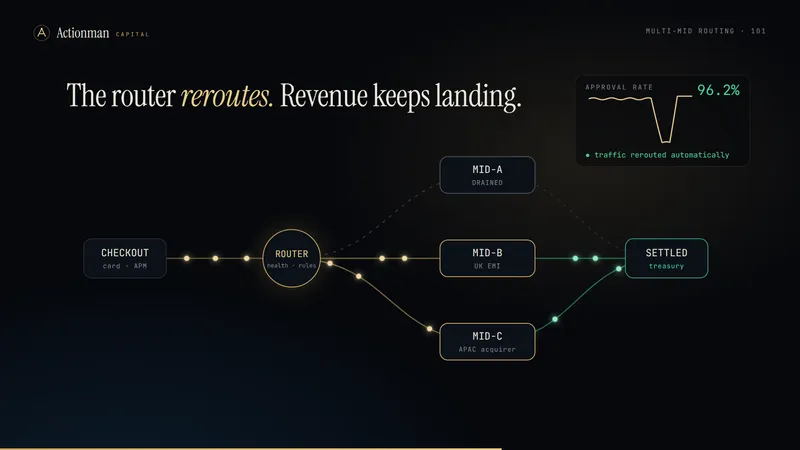
- Spreading volume to hide ratios. Multiple accounts are fine when each acquirer underwrote the real business and knows about the others. Spreading one offer across thinly underwritten MIDs to keep each under the thresholds is the load balancing the Humboldt order bans. Our guide to multi-MID routing for high-risk merchants covers the legitimate version.
- Ignoring refunds after fraud reports. Refunding before a dispute avoids the chargeback, but if the issuer has already filed a fraud report, that report can still count toward VAMP.
The nutra setup that works
1. Pick the model you can defend. Straight sale with an opt-in subscription at a clearly shown price is the easiest file to place and the easiest to keep. If you run trials, register them as trials and budget for the smaller caps.
2. Build the checkout to the strictest rule. Show the trial length, what is charged when, and the recurring price and frequency on the payment screen next to the button. Get explicit acceptance. Send the confirmation immediately, the reminder at least 7 days before the first full charge, and a receipt with a cancellation link every time you bill.
3. Make cancelling easier than disputing. One-click online cancellation, a phone line that answers, and a refund policy your support team actually applies. A customer who can cancel in a minute rarely calls their bank.
4. Use 3DS and dispute data properly. In the EEA and UK, authenticate the card when it is saved at sign-up so later rebills can go as merchant-initiated transactions. Send device ID and IP on every transaction so you can use Visa's Compelling Evidence 3.0 against "fraud" claims on returning customers. From 24 October 2026, Visa lets the qualifying prior purchases come from the same card or token at other merchants too (Chile excluded), and at pre-arbitration the acquirer can only submit transaction data it processed itself.
5. Watch the numbers your acquirer watches. VAMP, Mastercard's Excessive Chargeback Program (100 chargebacks and 1.5%), and now the Humboldt-style 1.0%/50-chargeback trigger many risk teams use internally. Track ratios weekly rather than waiting for the monthly report. Acquirer notices also say Mastercard's new Global Merchant Audit Program, which looks at fraud and disputes together, starts on 1 April 2027; ask your acquirer which thresholds will apply to you.
6. Plan for the reserve. Expect a rolling reserve on a new nutra account, sized to your dispute risk and history. Model the cash it ties up with the rolling reserve calculator before you sign, and negotiate a review date into the contract.
7. Keep a second acquirer live. One account is one decision away from zero. A second fully underwritten acquirer carrying real volume is what keeps revenue flowing during a review.
What to do next
If you sell supplements straight-sale, get your claims file, product documents and processing history together and apply to acquirers that state they take nutra, not ones that merely haven't excluded it. If you run trials, fix the checkout and the registration first, then apply. A clean trial file on MCC 5968 is a smaller account than you'd like, but it is one you get to keep.
We place nutra and subscription merchants with high-risk acquirers on full disclosure, and we review funnels against the Visa and Mastercard rules before an application goes in. See our high-risk merchant account service or contact us with your current processing statements. Nothing here is legal advice; take advice on consumer law in the markets you sell into.
Frequently asked questions
Can I get a merchant account for selling supplements?
Yes. Straight-sale supplement merchants with defensible claims, real product documents and some processing history are approved by specialist high-risk acquirers and some mainstream PSPs. Trial-and-rebill offers are much harder to place and come with smaller caps and a reserve.
What MCC is used for nutra free trial offers?
Under Mastercard's rules, merchants offering free or low-cost trials of physical products that convert into a subscription must use MCC 5968 (Direct Marketing – Continuity/Subscription Merchants) and be registered with Mastercard through their acquirer. Visa's Integrity Risk Program lists MCC 5968 negative-option merchants as a Tier 3 high-integrity-risk category.
How many days before a trial ends do I have to remind the customer?
Visa requires a reminder at least 7 days before the first charge after a trial or introductory period ends, with a link to cancel online. The same applies before a change in price or billing period. US state auto-renewal laws can add their own notice requirements.
Why do nutra merchant accounts get terminated?
The usual causes are trial billing on the wrong MCC, health claims the acquirer can't defend, hidden rebill terms, fulfilment problems and fraud-report or dispute ratios approaching the Visa VAMP or Mastercard thresholds. Spreading one offer across several thinly underwritten accounts to hide ratios is load balancing and ends in termination and can lead to a MATCH listing.
What did the FTC Humboldt order change for high-risk merchants?
The proposed order, filed on 8 September 2026, bars Humboldt from processing for straw companies, MATCH-listed merchants and mailbox-only e-commerce merchants that use negative-option billing or have no history. It also sets out the underwriting and monitoring the FTC expects, so other acquirers now ask more about real owners, prior terminations, operating addresses and the full sales funnel.
Do I need 3D Secure for subscription rebills?
In the EEA and UK, the card should be authenticated when it is saved at sign-up, including a free trial. Later rebills can then go as merchant-initiated transactions without a new challenge. Authentication at sign-up also strengthens your position on fraud disputes.
Sources
- ftc.gov · ftc takes action against payment processor humboldt merchant service…
- gtlaw.com · ftc targets payment processor in proposed $12 million sham merchant …
- usa.visa.com · visa new subscription rules flier
- jpmorgan.com · mastercard high risk negative option billing changes
- help.qualpay.com · mastercard high risk negative program
- checkout.com · new mastercard standards for subscriptions recurring payments and ne…
- blog.galalaw.com · new mastercard requirements for subscription and negative option bil…
- ccbill.com · visa integrity risk program virp
- legitscript.com · visa integrity risk program
- fraud.net · visas vamp thresholds drop to 1 5 on april 1 are you ready
- chargeflow.io · visa compelling evidence 3 0 explained
- chargeflow.io · mastercard excessive chargeback program
- payabl.com · mastercard gmap what merchants need to do before april 2027
- jonesday.com · ftc revives clicktocancel rule new risks for subscription businesses
- cov.com · ftc issues new guidance on health related claims to replace the diet…
- eur-lex.europa.eu · eng
- ftc.gov · ftc v triangle media corporation
- support.stripe.com · no prompt for 3d secure (3ds) authentication when customer creates a…
Rails open. Rails close. Know first.
One short email when something actually changes in banking, processing or crypto liquidity. Written by operators, for operators. No fluff, no spam, unsubscribe in one click.
Chargeback Ratio Thresholds: Visa VAMP and Mastercard Rules for 2026
Visa's VAMP threshold dropped to 1.5% in April 2026, and Mastercard still flags merchants at 100 chargebacks and 1.5%. How each ratio is calculated, what it costs, and how to bring it down legitimately.
MATCH List: Reason Codes, the 5-Year Rule and How Removal Works
A Mastercard MATCH listing lasts five years and only the listing acquirer can remove it early. The reason codes, how to find out why you were listed, and the removal routes that actually work.
High-Risk Merchant Accounts: How Multi-MID Routing Keeps You Processing
A high-risk merchant account is one decision away from zero. How multi-MID routing and failover work, the 2026 VAMP and retry rules a router must respect, why setups still fail, and where resilience ends and MID stacking begins.