
Hong Kong vs Singapore Company: The Operator's Comparison (2026)
Hong Kong or Singapore for your Asia entity? Directors, tax, audits, banking and payment processing compared, with the cases where each one wins and when to use both.
Hong Kong or Singapore is the most common fork in the road for operators building in Asia. Both are low-tax, common-law, English-speaking, well-banked financial centres. Both get you a company with real credibility, unlike a pure offshore IBC. And both will reject your bank application if you show up with no story.
They are not interchangeable, though. The differences that matter for operators aren't the headline tax rates. They're who can be a director, what you have to file, how hard the banks are, and what your counterparties think when they see the address.
This is the operator comparison: what each one costs to run, where each one banks better, and which one we'd pick for which business.
The short version
| Hong Kong | Singapore |
|---|---|---|
Resident director required | No | Yes, at least one ordinarily resident director |
Company secretary | Required: HK-resident individual or HK company | Required within 6 months of incorporation |
Headline profits tax | 8.25% on first HK$2M, 16.5% above | 17%, with partial exemption on the first S$200,000 |
Tax basis | Territorial: offshore profits can be non-taxable | Territorial for most foreign income, but remittance rules apply |
Audit | Mandatory every year, every company | Small companies exempt |
VAT / GST | None | 9% GST if taxable turnover exceeds S$1M |
Banking for foreign owners | Hard at big banks, good digital options | Hard at big banks, local director helps a lot |
Best known for | China and Asia trade, USD/CNH flows | Regional HQ, Western counterparties, treaty network |
If you're trading with mainland China or Asian suppliers and want no local director: Hong Kong. If you need a regional HQ that Western customers, investors and payment partners take seriously, and you can live with a resident director: Singapore.
Directors and control
Hong Kong lets a company be wholly owned and directed by non-residents. You need at least one director who is a natural person, and a company secretary who is a Hong Kong resident individual or a Hong Kong company. That secretary is a service you buy from your corporate services provider.
Singapore requires at least one director who is ordinarily resident in Singapore: a citizen, permanent resident, or holder of a qualifying work pass. Foreign founders without a pass solve this with a nominee director from a licensed provider, typically a few thousand Singapore dollars a year, or by relocating on an Employment Pass (minimum qualifying salary currently S$5,600 a month, S$6,200 in financial services, rising for new applications from January 2027).
Operator note: a nominee director in Singapore is a real director with real legal liability. Good providers will want to understand your business and will resign if you go quiet on compliance or move into a vertical they didn't sign up for. Choose one that accepts your business model upfront.
Tax: what you actually pay
Hong Kong
Hong Kong profits tax uses a two-tier system: 8.25% on the first HK$2 million of assessable profits and 16.5% above that. Only one company in a connected group can use the lower tier.
Hong Kong is territorial: profits that arise outside Hong Kong are not taxable there. This is the famous offshore claim. It is not automatic. The Inland Revenue Department assesses where profits arise on the facts, often through long questionnaires about where contracts are negotiated, signed and performed. A company with an office, staff and directors in Hong Kong will struggle to argue its profits arise elsewhere.
Since 2023, Hong Kong's foreign-sourced income exemption (FSIE) regime also taxes certain foreign-sourced passive income (dividends, interest, IP income and disposal gains) received in Hong Kong by entities in multinational groups, unless they meet economic substance or other exemption conditions.
Singapore
The headline corporate rate is 17%, but almost nobody small pays 17%:
- Partial tax exemption: 75% of the first S$10,000 of chargeable income and 50% of the next S$190,000 are exempt.
- Start-up tax exemption: for qualifying new companies in their first three years of assessment, 75% of the first S$100,000 and 50% of the next S$100,000 are exempt. Investment holding and property development companies don't qualify.
- Budget 2026 rebate: a 40% corporate income tax rebate for Year of Assessment 2026, capped at S$30,000 per company, with a minimum S$1,500 cash benefit for active companies that employed at least one local employee in 2025.
Singapore also taxes on a broadly territorial basis, but foreign-sourced income remitted into Singapore is taxable unless it qualifies for an exemption (for example, where it was subject to tax abroad at a headline rate of at least 15%). And since 1 January 2024, Section 10L taxes gains from selling foreign assets received in Singapore by group entities that lack economic substance in Singapore.
What this means in practice
For a profitable operating company with real activity in the jurisdiction, effective rates in both places are low single digits to mid-teens, depending on profit level. The bigger tax question is almost always where you, the owner, are tax resident and how your home country treats the company. Get that advice before choosing either.
Compliance: what it costs to keep the company alive
Hong Kong:
- Annual return to the Companies Registry
- Audited financial statements every year, for every company, dormant or not (dormant companies can file a dormancy resolution instead)
- Profits tax return when issued by the IRD
- Significant controllers register kept at the registered office
The mandatory audit is the main ongoing cost difference. Budget for it from day one.
Singapore:
- Annual return to ACRA
- Financial statements, with audit exemption for small companies (generally a private company meeting two of three criteria: annual revenue up to S$10 million, total assets up to S$10 million, up to 50 employees)
- Estimated chargeable income (ECI) and the annual corporate tax return to IRAS
- GST registration and filings once taxable turnover exceeds S$1 million
- Registers of controllers and nominee directors kept and lodged as required
For a small company, Singapore is often cheaper to keep compliant than Hong Kong because of the audit exemption, even after paying a nominee director.
Banking: where it actually gets decided
Neither jurisdiction gives you a bank account by default. The pattern is similar in both, and so are the reasons for rejection.
Hong Kong
The big banks (HSBC, Standard Chartered, Bank of China (Hong Kong) and others) are thorough and often want directors to attend in person or join a structured video interview. They want a Hong Kong nexus: suppliers, customers, an office, staff, or a genuine need for HKD/USD/CNH flows through Hong Kong.
The eight licensed digital banks and fintech account platforms onboard remotely and much faster, but with narrower services. Most foreign-owned Hong Kong companies we see run a digital bank or fintech account for daily operations and add a traditional bank once there's trading history. We cover this in detail in our Hong Kong company bank account guide.
Singapore
DBS, OCBC and UOB are conservative with foreign-owned companies. A local resident director who is genuinely involved, a Singapore address that's more than a mailbox, and a business with regional activity make a large difference. Many banks still prefer to meet the directors.
Fintech business accounts (Singapore-licensed payment institutions and multi-currency platforms) are where most new foreign-owned Singapore companies start. They're remote and quick, but they're not banks, and balances usually aren't covered by deposit insurance.
Banking verdict
- Easier to get started: roughly a tie. Both have good digital options.
- Easier to get a big-bank account as a non-resident with no local presence: Hong Kong, slightly, because Singapore banks lean heavily on the resident director and local substance.
- Better for USD/CNH and China trade flows: Hong Kong.
- Better standing with Western PSPs, acquirers and enterprise customers: Singapore.
Payments and processing
If card acquiring matters to your business, this is often the deciding factor.
Singapore entities generally have an easier time with global PSPs and acquirers, especially for low and medium-risk models. The regulatory reputation carries weight in underwriting.
Hong Kong entities are well served by Asia-focused PSPs and are a common choice for cross-border e-commerce selling to the West, but some Western acquirers treat Hong Kong as higher risk than they did a few years ago.
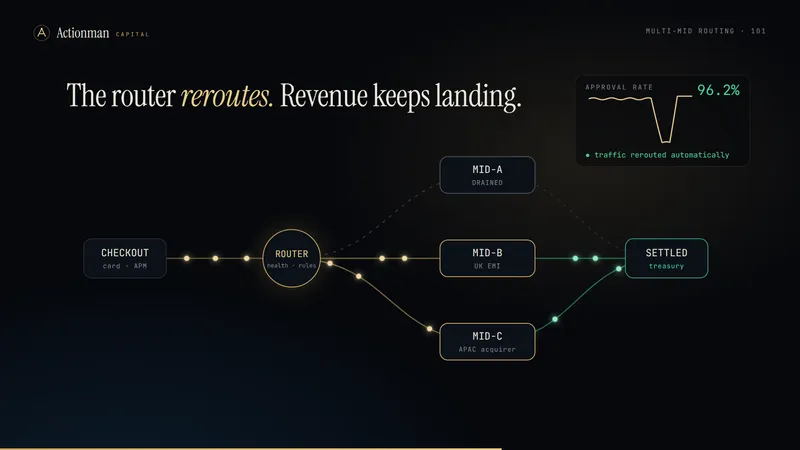
For high-risk verticals, neither jurisdiction opens doors on its own. The acquirer looks at the vertical, the processing history, the chargeback ratios and the owners first, and the entity's country second. Pair the entity with the right acquiring and orchestration setup; see our guide to multi-MID routing for high-risk merchants.
Which one we'd pick
Pick Hong Kong when:
- Your suppliers or manufacturing are in mainland China or elsewhere in Asia
- You need USD/HKD/CNH accounts and fast cross-border payments to Asian counterparties
- You want no resident director and no relocation
- Your profits genuinely arise outside Hong Kong and you're prepared to defend an offshore claim properly
Pick Singapore when:
- You're building a regional HQ and want the strongest reputation with Western partners, investors and PSPs
- You'll have real presence in Singapore (staff, a director, an office) or plan to relocate
- You want access to Singapore's wide treaty network
- You're a small company and want to avoid an annual audit
Use both when: you trade physical goods through Hong Kong and run the regional management, IP or holding function out of Singapore. It's a common pattern for operators past a few million in revenue, but only worth the second set of compliance costs once the volumes justify it.
The mistake we see most
Choosing on the headline tax rate and the formation price, then discovering the bank wants a business that looks like it belongs there. Decide where your people, customers and suppliers actually are, pick the jurisdiction that matches, and prepare the banking file before you incorporate. Formation takes days in both places. Getting the banking and processing right is what takes the time.
Frequently asked questions
Can a foreigner own 100% of a company in Hong Kong or Singapore?
Yes, in both. Hong Kong has no resident director requirement. Singapore requires at least one ordinarily resident director, which foreign founders usually meet with a licensed nominee director or by relocating on a work pass.
Which has lower corporate tax, Hong Kong or Singapore?
Hong Kong charges 8.25% on the first HK$2 million of profits and 16.5% above. Singapore's headline rate is 17%, but partial and start-up exemptions sharply reduce the effective rate for smaller companies, and a 40% rebate capped at S$30,000 applies for Year of Assessment 2026. For most small operating companies the difference is small; the owner's home-country tax position usually matters more.
Is an audit required for a Hong Kong or Singapore company?
Every Hong Kong company must have its financial statements audited each year. Singapore exempts small companies, generally private companies meeting two of three criteria: revenue up to S$10 million, total assets up to S$10 million and up to 50 employees.
Is it easier to open a corporate bank account in Hong Kong or Singapore?
Both have strict traditional banks and quicker digital options. Hong Kong's licensed digital banks are a common first account for foreign-owned companies. Singapore's major banks lean heavily on a genuinely involved resident director and local presence. Either way, a clear business rationale for the jurisdiction is what decides approval.
Sources
- ird.gov.hk · bus pft
- ird.gov.hk · bus fsie
- corporateservices.com · singapore budget overview
- excellencesg.com · opening a business in singapore as a foreigner what you need to know
- forvismazars.com · navigating singapore s section 10l
- 3ecpa.com.sg · singapore corporate tax exemptions for startups updated 2026
Rails open. Rails close. Know first.
One short email when something actually changes in banking, processing or crypto liquidity. Written by operators, for operators. No fluff, no spam, unsubscribe in one click.
Hong Kong Company Bank Account: A 2026 Guide for Non-Residents
How non-residents open a Hong Kong company bank account in 2026: traditional banks vs digital banks vs fintech platforms, documents required, realistic timelines, and how territorial tax and offshore claims fit in.
Offshore Company Bank Account: What Banks Accept in 2026
Why BVI and Seychelles companies struggle to get banked, what compliance teams actually assess, the KYB documents you need, and the realistic routes that work in 2026.
High-Risk Merchant Accounts: How Multi-MID Routing Keeps You Processing
A high-risk merchant account is one decision away from zero. How multi-MID routing and failover work, the 2026 VAMP and retry rules a router must respect, why setups still fail, and where resilience ends and MID stacking begins.